
Banks make billions every year from fees that most customers could avoid entirely. The frustrating part is that these bank fees rarely show up where you expect them. They hide in account agreements, get triggered by small mistakes, and quietly drain your balance a few dollars at a time. Once you know which charges are optional and which ones signal that your account no longer fits your needs, you can stop paying for the privilege of keeping your own money in the bank.
Here are seven bank fees you should never pay, plus the practical steps that let you avoid each one.
1. Monthly Maintenance Fees
The monthly maintenance fee is the most common bank fee, and it is almost always avoidable. Many traditional banks charge somewhere between $5 and $25 a month just to keep a checking or savings account open. Over a year, that adds up to real money for an account that does nothing extra for you.
Most banks waive this fee if you meet one simple condition. You might need to set up a direct deposit, keep a minimum daily balance, or make a certain number of debit transactions each month. Read your account terms and find out which waiver applies to you.
If you cannot comfortably hit the requirement, switch. Plenty of online banks and credit unions offer checking accounts with no monthly fee and no minimum balance. There is no reason to pay rent on a place that holds your cash.
2. Out-of-Network ATM Fees
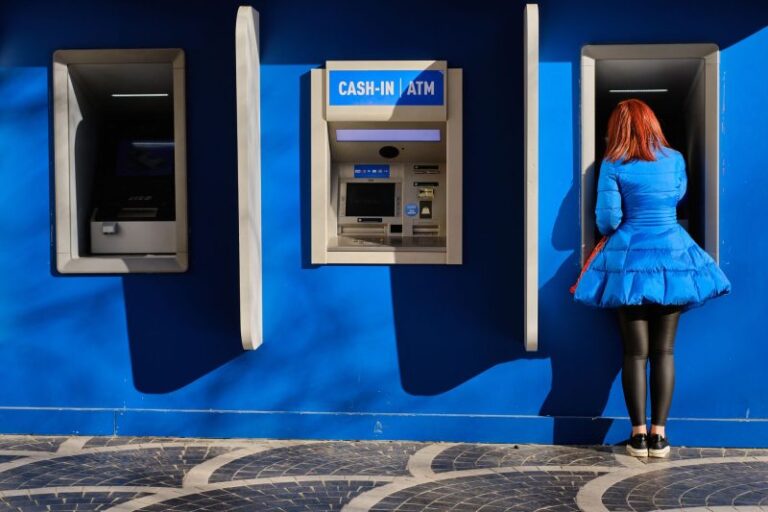
Pulling cash from the wrong ATM can cost you twice. Your own bank may charge a fee for using a machine outside its network, and the ATM operator usually tacks on a surcharge of its own. Combined, a single withdrawal can cost $4 to $7 before you see a dollar.
You can dodge this in a few ways. Use your bank’s ATM locator app to find in-network machines before you need cash. Ask for cash back at the grocery store or pharmacy when you use your debit card, since that is free at most retailers. Many online banks also reimburse ATM fees up to a monthly limit, so check whether yours does.
If you regularly travel or live in an area without nearby branches, an account that refunds ATM charges can save you far more than the interest most accounts pay.
3. Overdraft and Insufficient Funds Fees
Overdraft fees are among the most expensive bank fees relative to what triggers them. A single overdraft can run $30 to $35, and some banks charge it multiple times in one day. Spending a few dollars more than you have can turn into a $100 mistake by the weekend.
Start by opting out of overdraft coverage on debit card purchases. When you do, a transaction that would overdraw your account simply gets declined instead of going through and racking up a fee. That single setting protects you from the most common overdraft trap.
- Set low-balance alerts so your bank texts you before your balance runs out.
- Link your checking account to a savings account for free or low-cost overdraft Transfers.
- Track your true available balance, not just pending deposits that have not cleared.
A growing number of banks have dropped overdraft fees entirely or added a grace period that lets you fix a negative balance before any charge hits. If yours still charges aggressively, that is a strong reason to consider a different bank.
4. Paper Statement Fees
Some banks charge $2 to $5 a month to mail you a paper statement. This is one of the easiest fees to eliminate. Switch to electronic statements through your online banking portal, and the charge disappears.
Going paperless also gives you faster access to your records and reduces the risk of sensitive mail sitting in an unlocked box. If you want a physical copy for a specific month, you can usually download and print the PDF for free.
5. Wire Transfer Fees
Wire transfers move money quickly, but banks charge handsomely for the speed. Domestic wires often cost $15 to $35 to send, and international wires can run higher. Receiving a wire sometimes carries a fee too.
For most everyday transfers, you do not need a wire at all. Free options handle the job for routine amounts:
- ACH transfers between your own accounts or to other people, which are free at most banks but take a day or two.
- Peer-to-peer apps linked to your bank account, which move money to friends and family at no cost.
- Bill pay through your bank, which sends electronic or mailed payments to companies for free.
Reserve wires for situations that genuinely require same-day, guaranteed funds, such as a real estate closing. For everything else, the slower free option works fine.
6. Foreign Transaction Fees
If you travel abroad or buy from international sellers online, your debit card may charge a foreign transaction fee of roughly 1% to 3% on each purchase. It is a small percentage, but it stacks up across a whole trip.
Before you travel, check whether your debit card adds this fee. Many online banks and some credit unions waive foreign transaction fees entirely. A travel-friendly checking account or a credit card with no foreign transaction fee can cover purchases overseas without the extra cost.
When a foreign merchant or ATM offers to charge you in your home currency, decline and pay in the local currency instead. The conversion the merchant offers usually carries a worse exchange rate than your bank’s.
7. Account Closing and Dormancy Fees
Banks sometimes charge a fee if you close an account shortly after opening it, often within 90 to 180 days. Others charge a dormancy or inactivity fee when an account sits untouched for a long stretch.
Avoid the early closing fee by reading the terms before you open an account and waiting out the window if you plan to switch. To sidestep dormancy fees, log in occasionally and make a small transaction, even a tiny transfer, to keep the account active. If you no longer use an account, close it properly rather than letting it go quiet and accumulate charges.
How to Keep Bank Fees Off Your Statement for Good
The pattern behind nearly every fee on this list is the same. Banks charge for convenience, for mistakes, and for inactivity, and they count on customers not reading the fine print. You can flip that dynamic with a short review of your account terms.
Pull up your bank’s fee schedule, which it is required to provide, and match each listed charge against your habits. Look for the maintenance fee, the overdraft policy, ATM access, and any transfer costs. Then decide whether your current account earns its place or whether a no-fee option would serve you better.
Many account holders find that switching to an online bank or a credit union removes most of these charges at once. If you would rather stay put, a quick call to your bank can sometimes get a fee waived, especially if you have been a long-term customer with a clean record.
Bank fees are not a fixed cost of having an account. They are a choice, and with a little attention, it is a choice you can stop making.
